Educational Activities for Kids During Winter Break
posted on Dec 18, 2025
Discover fun and meaningful educational activities for kids during winter break that boost creativity, learning habits, and help students return to school confident.
Introduction
Winter break is often seen as a time to relax, unwind, and take a pause from routine academics. However, for children, it can also be a valuable opportunity to explore new interests, strengthen essential skills, and continue learning in a stress-free way. When thoughtfully planned, educational activities during winter break help children stay curious, engaged, and mentally active without feeling overwhelmed.
At schools like BGS Vijnatham School , one of the Best School in Noida Extension, learning is viewed as a continuous journey that extends beyond classrooms. Winter holidays offer the perfect chance for parents and educators to support this philosophy by encouraging meaningful activities that combine enjoyment with growth.
Why Educational Activities Matter During Winter Break
Long breaks without mental stimulation can make it harder for children to regain focus once school resumes. Educational activities during winter break help maintain learning momentum while giving students the freedom to explore topics at their own pace. These activities also promote independence, creativity, and critical thinking—skills that are essential for lifelong success.
More importantly, learning during the holidays does not need to resemble traditional classroom teaching. Informal, hands-on experiences often leave a stronger impact and help children associate learning with curiosity rather than pressure.
Encouraging Reading Through Winter-Themed Exploration
Reading remains one of the most effective and accessible educational activities during winter break. Children can explore storybooks, age-appropriate novels, biographies, or even illustrated science books related to winter, space, animals, or inventions. Encouraging daily reading time helps improve vocabulary, comprehension, and imagination.
Parents can make reading more engaging by discussing stories together, asking open-ended questions, or encouraging children to write short summaries or alternate endings. This transforms reading into an interactive learning experience rather than a solitary task.
Creative Arts and Craft Activities With Learning Value
Winter break is an excellent time to introduce creative projects that enhance fine motor skills and artistic expression. Activities such as drawing winter scenes, making greeting cards, building paper models, or creating recycled crafts help children learn patience, planning, and attention to detail.
To add an educational layer, children can research the materials they use, learn about colors and shapes, or present their finished projects to family members. Such activities nurture confidence while reinforcing communication skills.
Hands-On Science Experiments at Home
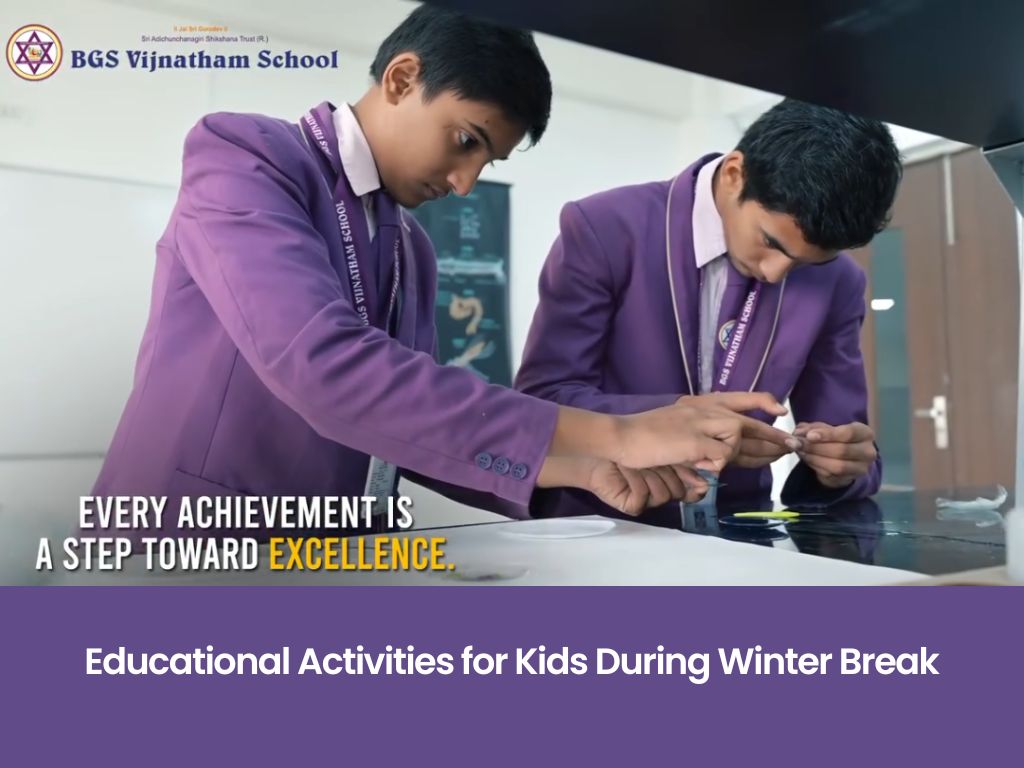
Simple science experiments can turn winter break into a season of discovery. Activities like observing how ice melts, experimenting with magnets, growing indoor plants, or creating basic chemical reactions using household items spark curiosity and logical thinking.
These experiments encourage children to ask questions, make predictions, and understand cause-and-effect relationships. Science-based activities are especially effective because they teach children how to think rather than what to memorize.
Developing Life Skills Through Daily Activities
Winter holidays provide a relaxed environment to teach children essential life skills. Cooking simple meals, organizing personal spaces, budgeting pocket money, or helping plan family schedules all contribute to real-world learning. These activities build responsibility, independence, and problem-solving abilities.
Life-skill education supports holistic development and prepares children to handle everyday challenges confidently. Schools that focus on overall growth recognize that learning happens in every experience, not just textbooks.
Strengthening Communication and Writing Skills
Writing activities during winter break help children express thoughts clearly and creatively. Maintaining a holiday journal, writing short stories, composing letters, or documenting daily experiences improves language skills and emotional expression.
Encouraging children to share their writing with parents or siblings boosts confidence and helps refine communication. These activities are especially useful for developing clarity of thought and structured expression.
Educational Games and Puzzles for Cognitive Growth
Board games, puzzles, memory games, and logic challenges offer an enjoyable way to enhance cognitive abilities. Such games improve concentration, strategic thinking, and patience while keeping children engaged for longer periods.
Digital learning platforms can also be used in moderation to reinforce concepts in mathematics, language, or science. The key is maintaining a healthy balance between screen-based and hands-on learning experiences.
Physical Activities That Support Learning
Physical movement plays a vital role in brain development. Winter-friendly exercises such as indoor yoga, stretching routines, dance sessions, or simple fitness challenges help improve coordination, focus, and emotional well-being.
Combining physical activity with learning—such as counting exercises, movement-based games, or rhythm activities—keeps children active while reinforcing academic concepts naturally.
Helping Children Reflect and Set Goals
Winter break is an ideal time for reflection. Encouraging children to think about what they learned during the year, what they enjoyed, and what they want to improve helps build self-awareness and motivation. Simple goal-setting activities can help students return to school with renewed purpose.
This reflective approach aligns with the values practiced at BGS Vijnatham School , one of the Best Schools in Greater Noida West, where student growth is nurtured through thoughtful learning experiences both inside and outside the classroom.
Preparing Children for a Smooth Return to School
As winter break comes to an end, gradually reintroducing routines helps children transition back to school life. Light revision, organized schedules, and positive conversations about learning ensure students return confident and refreshed rather than anxious.
Educational activities during winter break are not about academic pressure; they are about keeping curiosity alive. When children are encouraged to explore, create, and reflect, learning becomes a joyful process that continues well beyond the school calendar.